Do You Need a Permit for a Dumpster in York County, PA?
York County has no general right-of-way permit office — every one of its 72 municipalities handles its own streets. Here’s exactly who to contact based on where your dumpster sits.
York dumpster guide
Most household and construction debris is fair game — but Pennsylvania law draws hard lines around hazardous materials, electronics, and a few other categories. Here’s the full list.
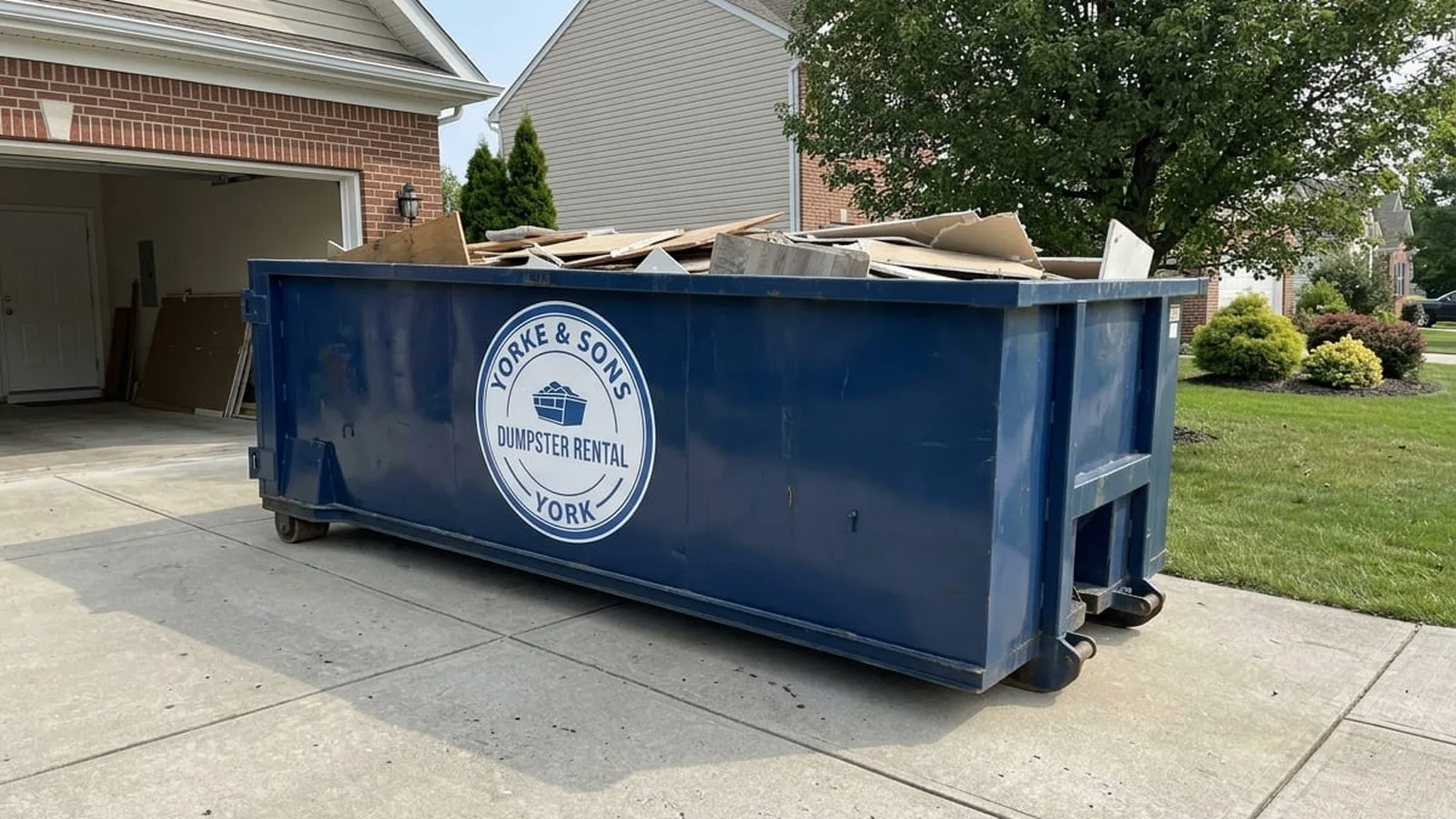
The large majority of what customers dispose of — furniture, general household junk, construction and demolition debris, flooring, drywall, siding, cabinetry, clean yard debris, and packed-up moving leftovers — goes into a rental dumpster without any special handling. If you’re unsure whether something specific qualifies, the Yorke & Sons Dumpster Rental team is a phone call away at (717) 400-8504 before you load it.
Pennsylvania law and standard landfill acceptance rules prohibit a specific set of materials from any roll-off dumpster, no exceptions:
Paint and paint cans (wet), fuel, motor oil, chemicals and solvents, lead-acid batteries, tires, medical or biohazard waste, and any appliance still holding refrigerant — refrigerators, freezers, window AC units, and dehumidifiers with a sealed refrigerant loop all need refrigerant recovery before disposal, not a dumpster.
Asbestos-containing material — old floor tile, pipe wrap, some textured ceiling finishes, certain siding — is never allowed in a rental dumpster under any circumstance. It requires a licensed abatement contractor for testing, removal, and disposal through a permitted asbestos waste stream. If you suspect a material in an older York County home might contain asbestos, stop and have it tested before any demolition work begins, let alone before it goes in a container.
Computers, monitors, and televisions are handled differently in Pennsylvania than ordinary trash. Under the Covered Device Recycling Act, it’s illegal for Pennsylvania residents to put these devices in regular trash or a dumpster at all. The law requires manufacturers to fund free take-back recycling programs, so there’s no cost excuse for doing it the wrong way — a certified electronics recycler is the correct destination, not the dumpster and not the curb.
If you’ve rented a yard-waste-specific box, the exclusion list is narrower but still firm: treated or pressure-treated lumber, plastic planters and pots, fertilizers or lawn chemicals, and bagged household trash mixed in with the yard debris all need to go elsewhere. Keep yard waste clean — branches, brush, leaves, grass clippings — and the box stays easy to process.
Tires and lead-acid batteries are excluded from dumpsters everywhere, not just in Pennsylvania, because both have dedicated recycling infrastructure built specifically for them. Most auto parts retailers accept old lead-acid batteries for recycling, often for free, and many tire shops accept old tires when installing new ones. These aren’t materials worth trying to sneak into a mixed load — they’re also two of the easiest items to route correctly since so many local businesses already handle them.
Needles, sharps, and any medical or biohazard waste require specialized handling through pharmacies, medical facilities, or dedicated sharps disposal programs — never a household dumpster. This category exists to protect the people who handle waste downstream, from the hauling crew to landfill workers, and the rule has no gray area.
These aren’t arbitrary. Hazardous materials contaminate an entire load and can shut down processing at the disposal facility; refrigerant is an environmental release risk; asbestos fibers are a serious health hazard when disturbed; e-waste contains materials Pennsylvania specifically wants captured for recycling rather than landfilled. The PA DEP’s Recycling in Pennsylvania program and the EPA Region 3 office, which covers Pennsylvania, both publish more detail if you want the full regulatory background.
Sorting a prohibited item out of a full dumpster after the fact is far more of a headache than a quick question before loading. Call (717) 400-8504 and describe what you’re disposing of — the team would rather answer the question up front than deal with a rejected load.
FAQs
Not without refrigerant recovery first. Any appliance with a sealed refrigerant loop — refrigerators, freezers, window AC units, dehumidifiers — needs that refrigerant properly recovered before it can be disposed of. Ask the team about arranging this.
Fully dried, empty latex paint cans are typically fine, but wet paint of any kind — latex or oil-based — is prohibited. When in doubt, set it aside and ask rather than risk contaminating the whole load.
Not the dumpster and not the curb — Pennsylvania’s Covered Device Recycling Act requires these go to a certified electronics recycler, and manufacturer-funded take-back programs make this free. The York County Solid Waste & Refuse Authority (ycswa.com) can point you to local drop-off options.
Stop work in that area and have the material tested before proceeding. Asbestos removal requires a licensed abatement contractor — it can never go in a rental dumpster, tested or not, once confirmed.
Generally yes, mixed loads of ordinary construction debris and household junk are fine in the same container. The exclusions above — hazardous materials, e-waste, asbestos, refrigerant appliances — apply regardless of what else is in the load.
Ready when you are
Call and you will speak to someone local who knows the streets, the permit rules and which box actually fits your driveway. Flat rate quoted up front.
Keep reading
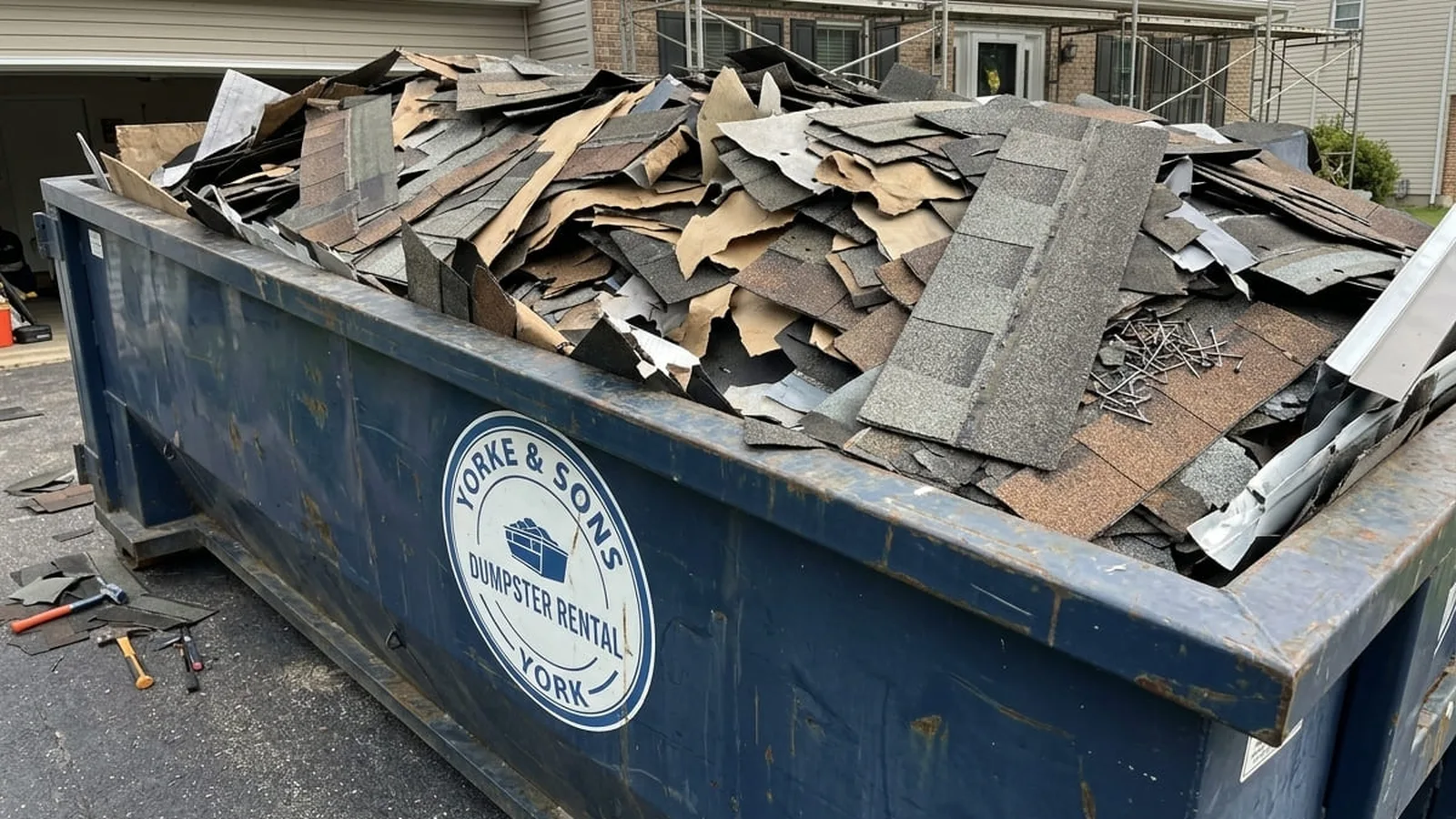
York County has no general right-of-way permit office — every one of its 72 municipalities handles its own streets. Here’s exactly who to contact based on where your dumpster sits.
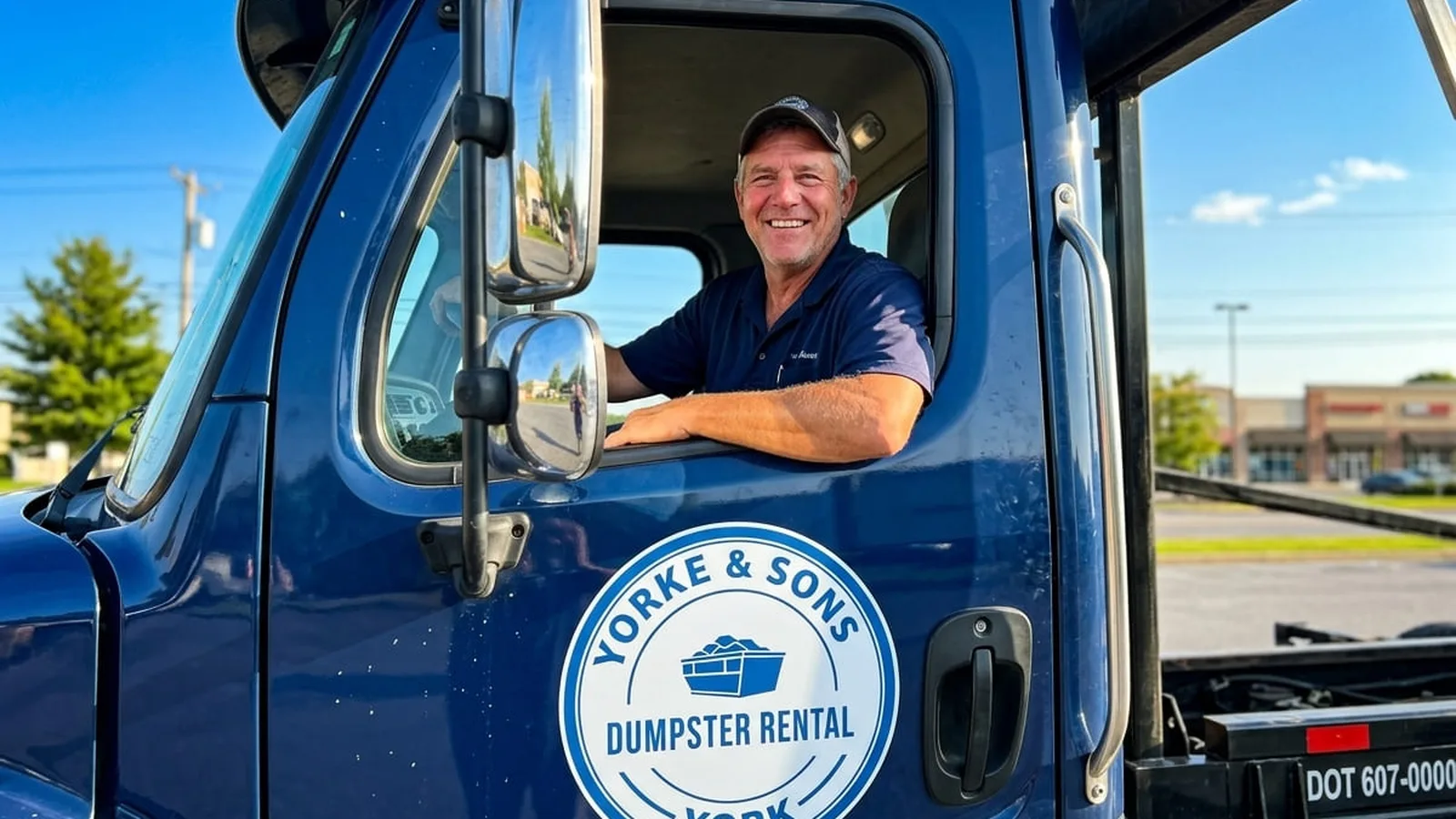
From framing offcuts to full demolition loads, construction debris has its own sizing logic and its own weight math. Here’s how contractors plan for it.
Estate and downsizing cleanouts are emotional work as much as physical work. This checklist keeps the physical part organized so the rest gets easier.