Roofing Tear-Off Dumpster Guide for York County
Shingles are heavy, and roofing is one of the few jobs where weight — not volume — usually decides the right dumpster size. Here’s how to size it correctly.
York dumpster guide
Estate and downsizing cleanouts are emotional work as much as physical work. This checklist keeps the physical part organized so the rest gets easier.
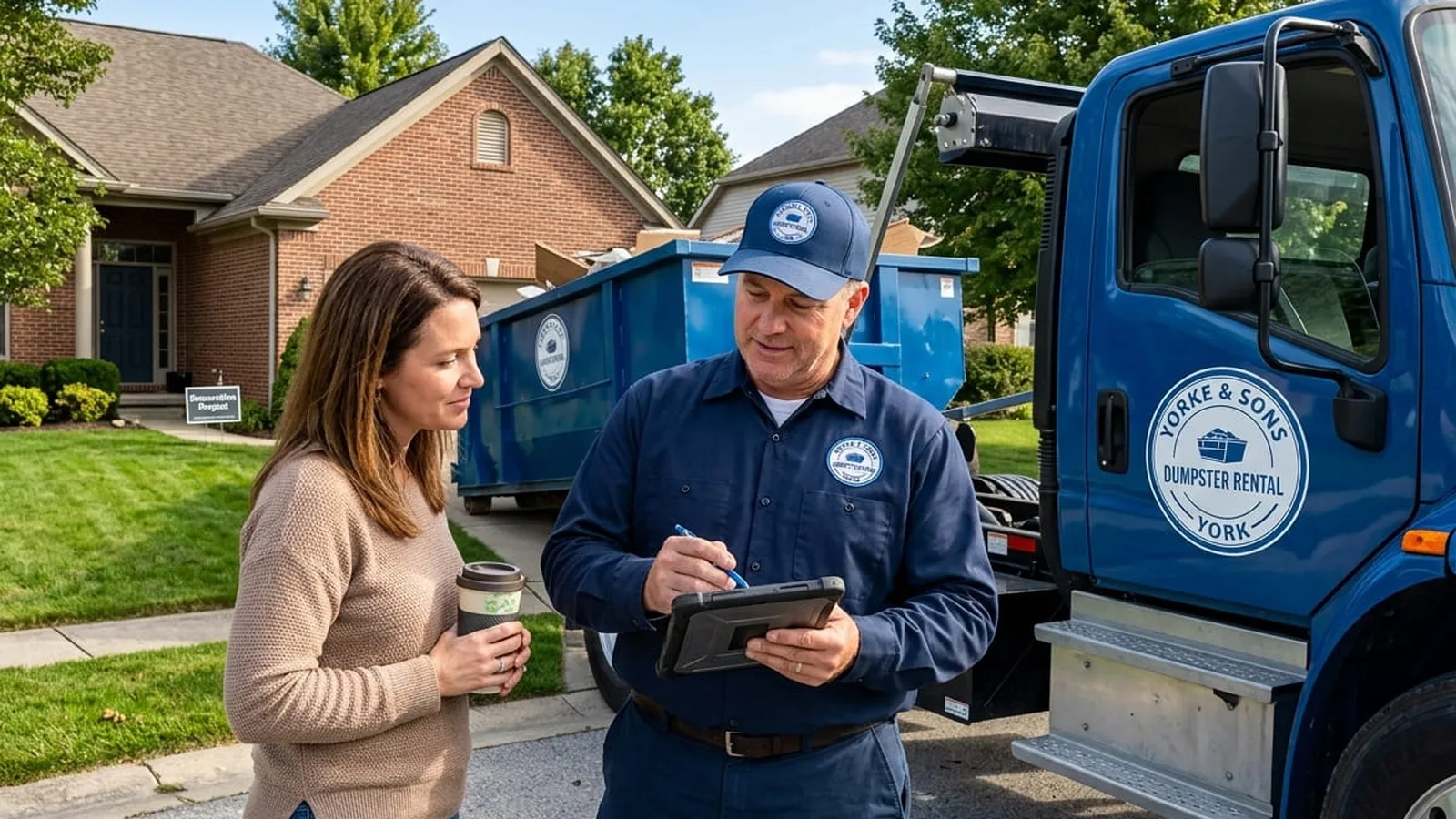
Estate cleanouts and major downsizing projects go smoother with a plan before the container ever arrives. The Yorke & Sons Dumpster Rental team has supported enough of these across York County — from rowhomes in the City of York to farmhouses out toward Dover Township — to know the physical logistics are easier when they’re broken into stages.
Before anything goes near the dumpster, sort belongings into four categories: keep, donate, sell, and dispose. This step takes longer than it feels like it should, but it prevents the two most common regrets in a cleanout — things thrown out that shouldn’t have been, and a dumpster that fills up with items that could have gone to a local donation center instead of the landfill.
Estate cleanouts almost always take longer than expected, especially when a home has been lived in for decades. Rather than booking a single weekend and hoping to finish, talk to the team about a rental period that matches the actual scope — a longtime family home usually needs more time than a recent downsizing situation with fewer accumulated belongings.
Work through the property systematically rather than jumping between rooms:
Attic and basement — often the heaviest, dustiest, and most time-consuming areas; start here while energy is highest. Bedrooms and closets — clothing and linens are usually donation candidates before disposal. Kitchen — check appliances for refrigerant before disposal (see below). Garage and shed — this is where prohibited items like old paint, fuel, and chemicals tend to accumulate; set these aside rather than loading them. Yard and outbuildings — furniture, garden equipment, and general storage overflow.
Estate properties, especially older ones, often turn up items that need separate handling: paint cans, fuel for lawn equipment, old batteries, and appliances with refrigerant (refrigerators, freezers, window AC units) all need to be set aside rather than loaded. Computers, monitors, and televisions fall under Pennsylvania’s Covered Device Recycling Act and must go to a certified electronics recycler, not the dumpster — see our full disposal rules guide for the complete list.
A full estate cleanout, especially of a longtime family home, is more volume than most people estimate on the first pass. A 20 or 30 yard container is typical for a full-house cleanout; a single room or partial downsizing project may only need a 10 or 15 yard. See our sizing guide for the full breakdown, and call the team to talk through the property size rather than guessing.
Estate cleanouts often run over several weekends rather than a single push, so talk to the team about rental length up front. If the property is in the City of York or another municipality where street placement is the only option, check our permit guide to understand what’s needed before delivery day.
Cleanouts often involve multiple family members with different opinions about what stays and what goes, and that’s normal — it’s part of why the sorting stage matters so much. Having the dumpster on-site for the full agreed rental period, rather than rushing to fill it in a single day, gives everyone room to make those calls without pressure. If the estate is going through a formal executor process, it can also help to photograph rooms before the cleanout begins, in case documentation is needed later.
Estate cleanouts are hard enough without also becoming a logistics puzzle. Call (717) 400-8504, describe the property and timeline, and the team will size and schedule the container so the physical work is one less thing to manage.
FAQs
Most full-house cleanouts use a 20 or 30 yard container, but it depends on the size of the property and how much furniture and belongings remain. Call the team to talk through the specifics.
Set these aside — they can’t go in the dumpster. York County Solid Waste & Refuse Authority (ycswa.com) can point you to hazardous waste disposal options for these items.
Sort them separately before hauling anything. Items in good condition are worth offering to local donation centers first — only what’s left after that sort should go in the dumpster.
These fall under Pennsylvania’s Covered Device Recycling Act and need to go to a certified electronics recycler, not the dumpster. Manufacturer-funded take-back programs make this free.
Yes — tell the team your realistic timeline when you order. Estate cleanouts often take more than one pass, and rental length can be set accordingly from the start.
Ready when you are
Call and you will speak to someone local who knows the streets, the permit rules and which box actually fits your driveway. Flat rate quoted up front.
Keep reading
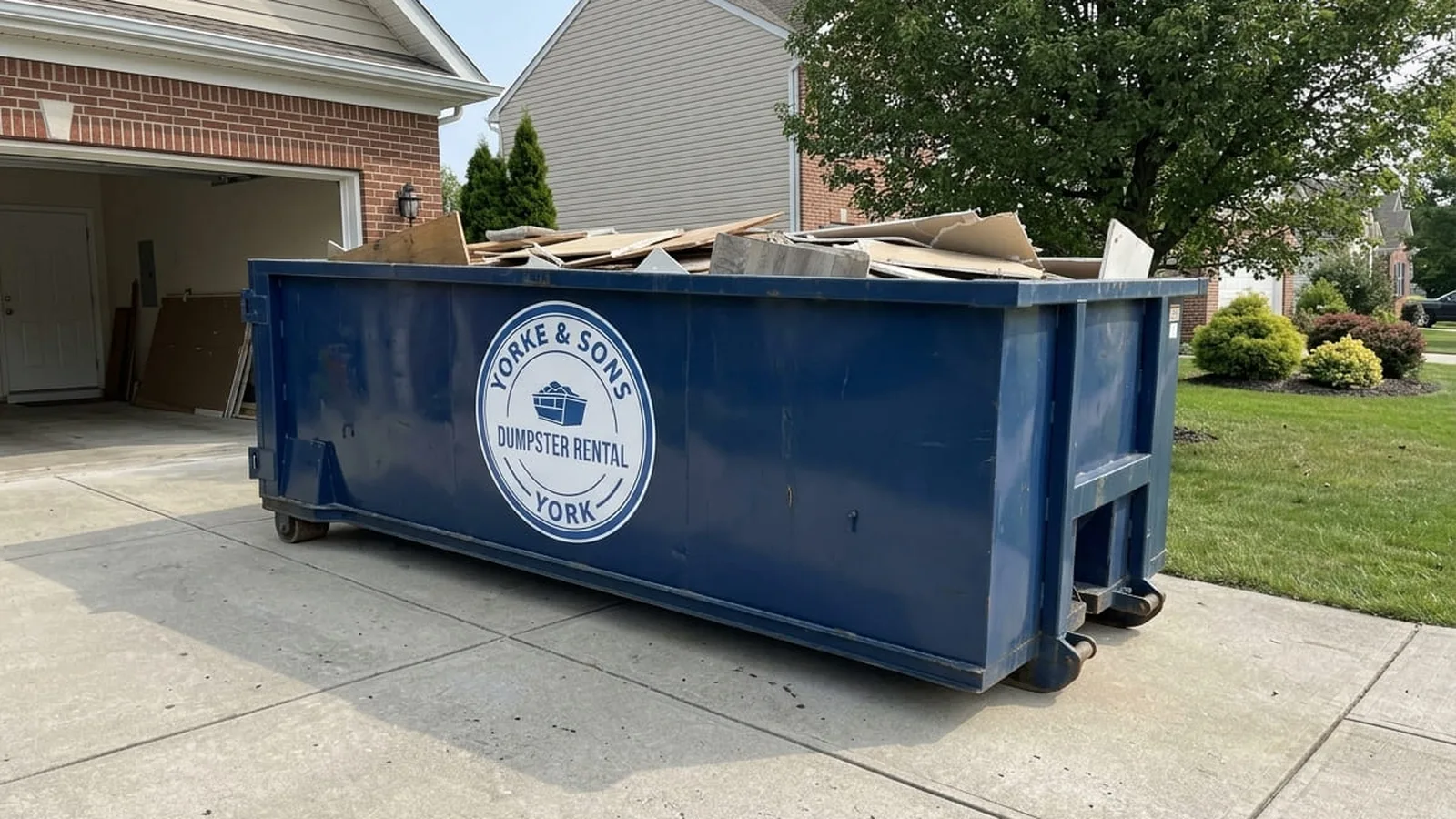
Shingles are heavy, and roofing is one of the few jobs where weight — not volume — usually decides the right dumpster size. Here’s how to size it correctly.
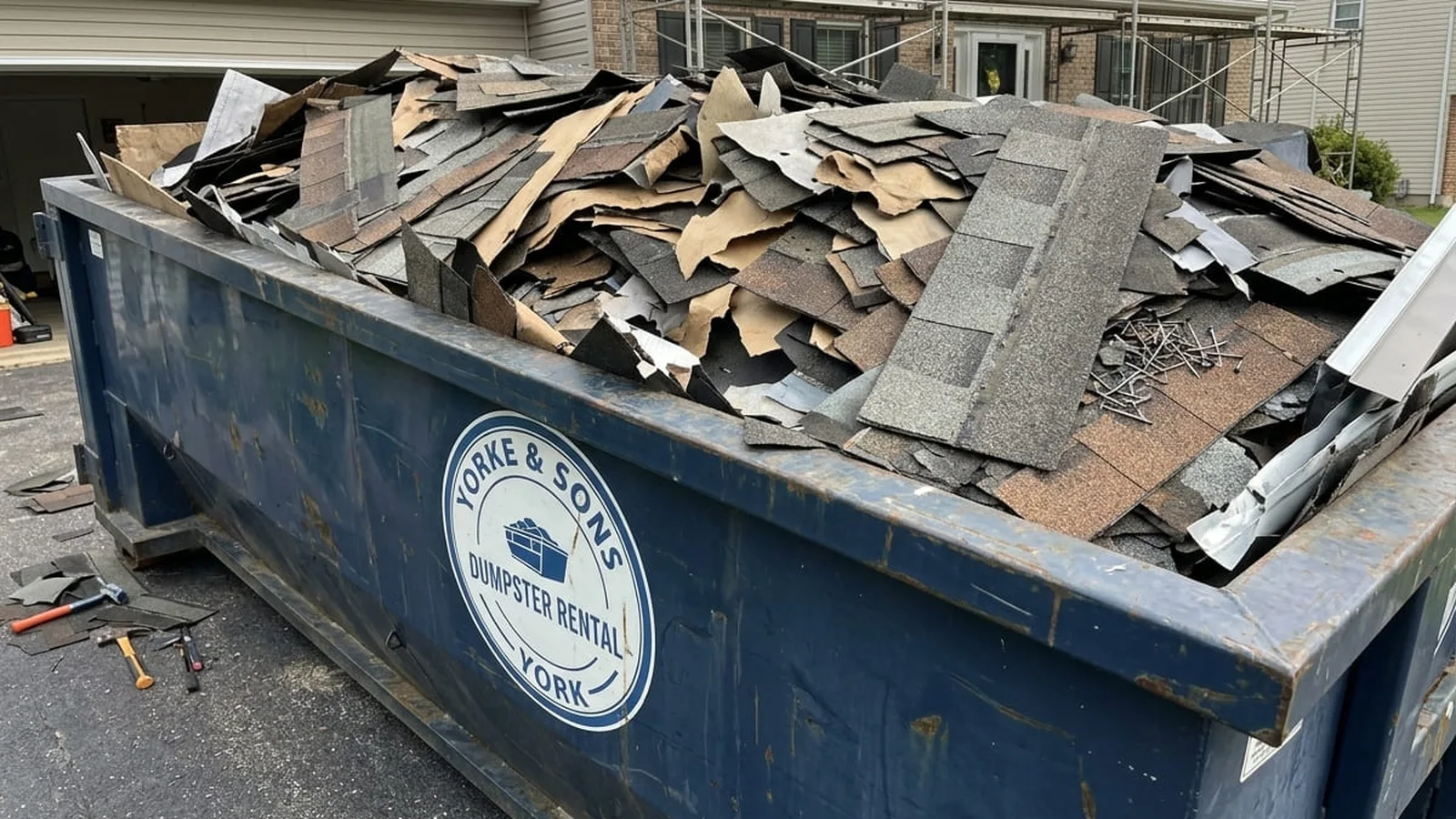
York doesn’t get one hard freeze and stay there — it cycles between freezing nights and above-freezing days all winter, and that repeated cycle is what causes the damage.
A loaded dumpster is heavy, and York’s soft spring ground, older pavement, and tight rowhome lots all call for the same fix: boards under the container, every time.