What Determines Dumpster Rental Cost in York, PA?
Dumpster pricing isn’t random — it comes down to a handful of factors you can control. Here’s what actually moves the number, and why we quote flat rates instead of surprise fees.
York dumpster guide
Picking the right dumpster size comes down to two questions: how much space will the debris take up, and how much will it weigh? Here’s how to answer both before you call.

Every dumpster question really has two parts: volume and weight. A container can be too small to hold your debris, or it can be plenty roomy but still hit its tonnage limit before it’s even full. The Yorke & Sons Dumpster Rental team sizes jobs around both numbers every day across York County, from rowhome cleanouts in the City of York to new-construction sites in Springettsbury Township, so we’ll walk through the five sizes we run and where each one actually fits.
10 yard – small bathroom or kitchen remodel, garage cleanout, a single room of furniture. Fits in a standard driveway with room to spare.
15 yard – medium cleanouts, small deck removal, a few rooms of flooring tear-out. A good step up when a 10 yard feels tight but a 20 yard feels like overkill.
20 yard – the size most homeowners land on: whole-house decluttering, roof tear-offs up to about 20 squares, medium remodels. See our full 20 yard dumpster page for dimensions.
30 yard – home additions, whole-house flooring or siding jobs, larger estate cleanouts. Needs more driveway or yard space to load comfortably.
40 yard – new construction, commercial gut-outs, large-scale demolition. Bulky but light material (like framing lumber) is the classic 40 yard load; heavy debris rarely belongs in this size.
Yard size measures how much space is inside the box. Weight limits are a completely separate ceiling set by tonnage, and they matter most with dense material — concrete, brick, roofing shingles, wet drywall, dirt. A 20 yard container full of shingles can hit its weight limit while still looking half empty. That’s why we always ask what the debris actually is, not just how much of it there seems to be, before recommending a size.
Mixed household debris (furniture, boxes, general junk) is the opposite case — it’s usually volume-limited long before it’s weight-limited, since it’s bulky but not dense. A garage full of old furniture and boxed-up belongings can fill a 20 yard container to the brim while weighing far less than a driveway’s worth of broken concrete sitting in a 10 yard box.
Renovation and remodeling debris, especially drywall and tile, benefits from sizing a notch smaller than instinct suggests because of weight. Roofing jobs should be sized by number of squares removed and number of layers — see our roofing tear-off dumpster guide for the specifics. Construction and demolition debris on active jobsites is covered in our construction debris disposal guide, and estate or downsizing cleanouts get their own estate cleanout checklist. Yard debris and landscaping cleanups are usually their own category too, since brush and branches take up real volume but weigh comparatively little, meaning a mid-size container often clears a surprising amount of yard work in one pull.
Beyond the debris itself, think about where the container will actually sit. A standard driveway in West Manchester Township or Springettsbury Township usually has plenty of room for anything up to a 30 yard, but tighter lots in older sections of the City of York, West York, or North York may only comfortably fit a 10 or 15 yard without blocking a walkway or neighboring access. If space is tight, it’s often better to size down and plan for a swap than to order a container that can’t be positioned where you need it.
Guessing wrong on size costs time — either a second container shows up mid-project, or a smaller box sits half-empty when a larger one would have cost about the same to haul. Describe your project when you call (717) 400-8504 and the team will size it correctly the first time, then give you a flat-rate quote with no surprise weight fees buried in fine print.
FAQs
For most whole-house cleanouts and mid-size remodels across York County, a 20 yard dumpster is the most common choice — enough volume for furniture and construction debris without the footprint of a 30 or 40 yard.
You can, but weight limits make small, dedicated loads the smarter call for heavy material like concrete, brick, or dirt. Ask the team about the right size when you describe the material — dense debris is priced and sized differently than mixed household junk.
Often yes, but City of York and older borough streets sometimes require street placement instead of driveway placement. Call ahead with your address and the team will confirm what fits and what permit, if any, applies — see our York dumpster permit guide for details.
Call the team before it happens if you can tell the load is running ahead of plan. A swap to a larger container or an early second pickup is easy to arrange — it’s much simpler than guessing wrong from the start.
Not directly, but longer projects sometimes benefit from a slightly larger container so you’re not scheduling a swap mid-job. See our dumpster rental cost guide for how rental length factors into your quote.
Ready when you are
Call and you will speak to someone local who knows the streets, the permit rules and which box actually fits your driveway. Flat rate quoted up front.
Keep reading
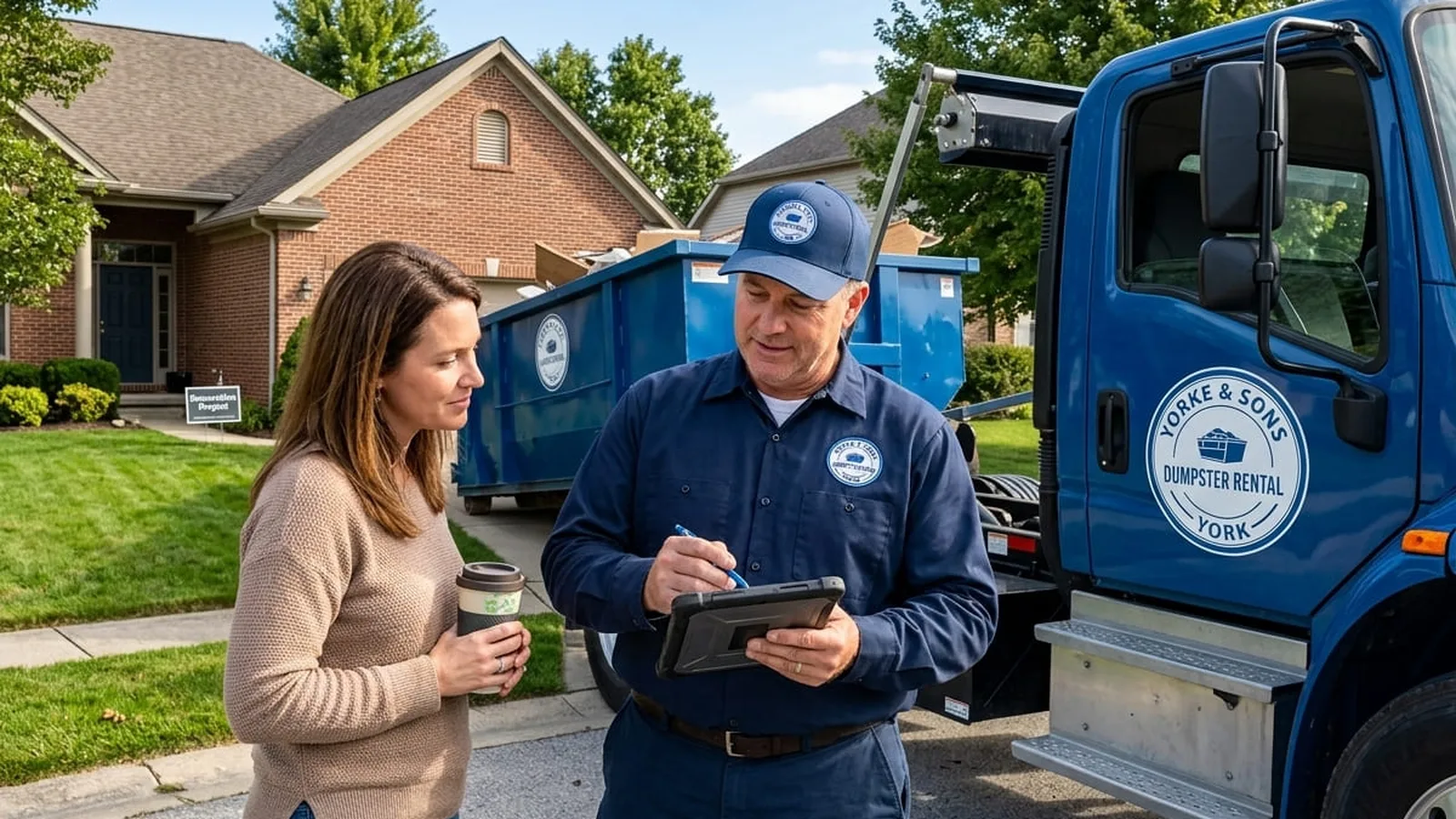
Dumpster pricing isn’t random — it comes down to a handful of factors you can control. Here’s what actually moves the number, and why we quote flat rates instead of surprise fees.
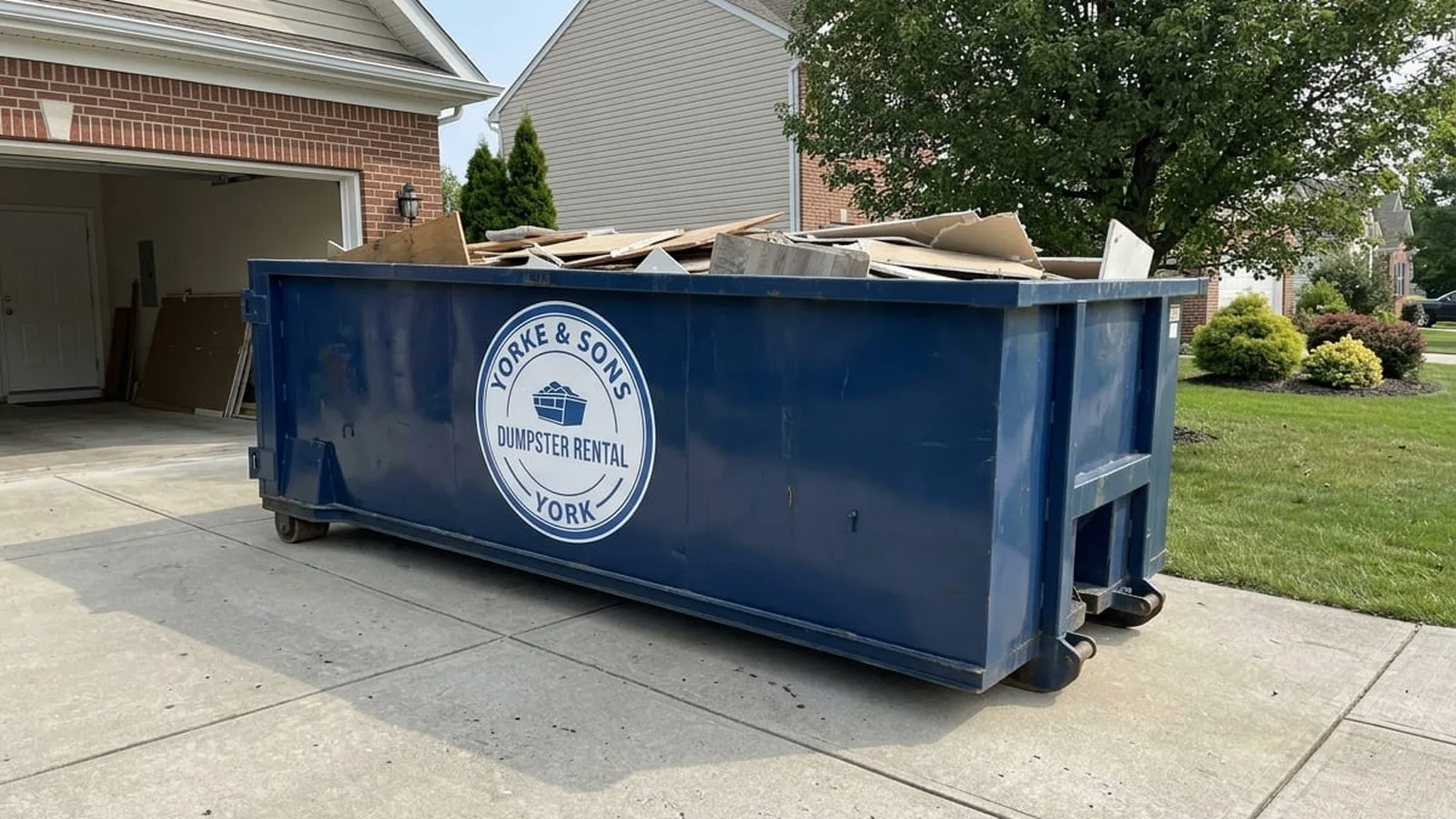
Most household and construction debris is fair game — but Pennsylvania law draws hard lines around hazardous materials, electronics, and a few other categories. Here’s the full list.
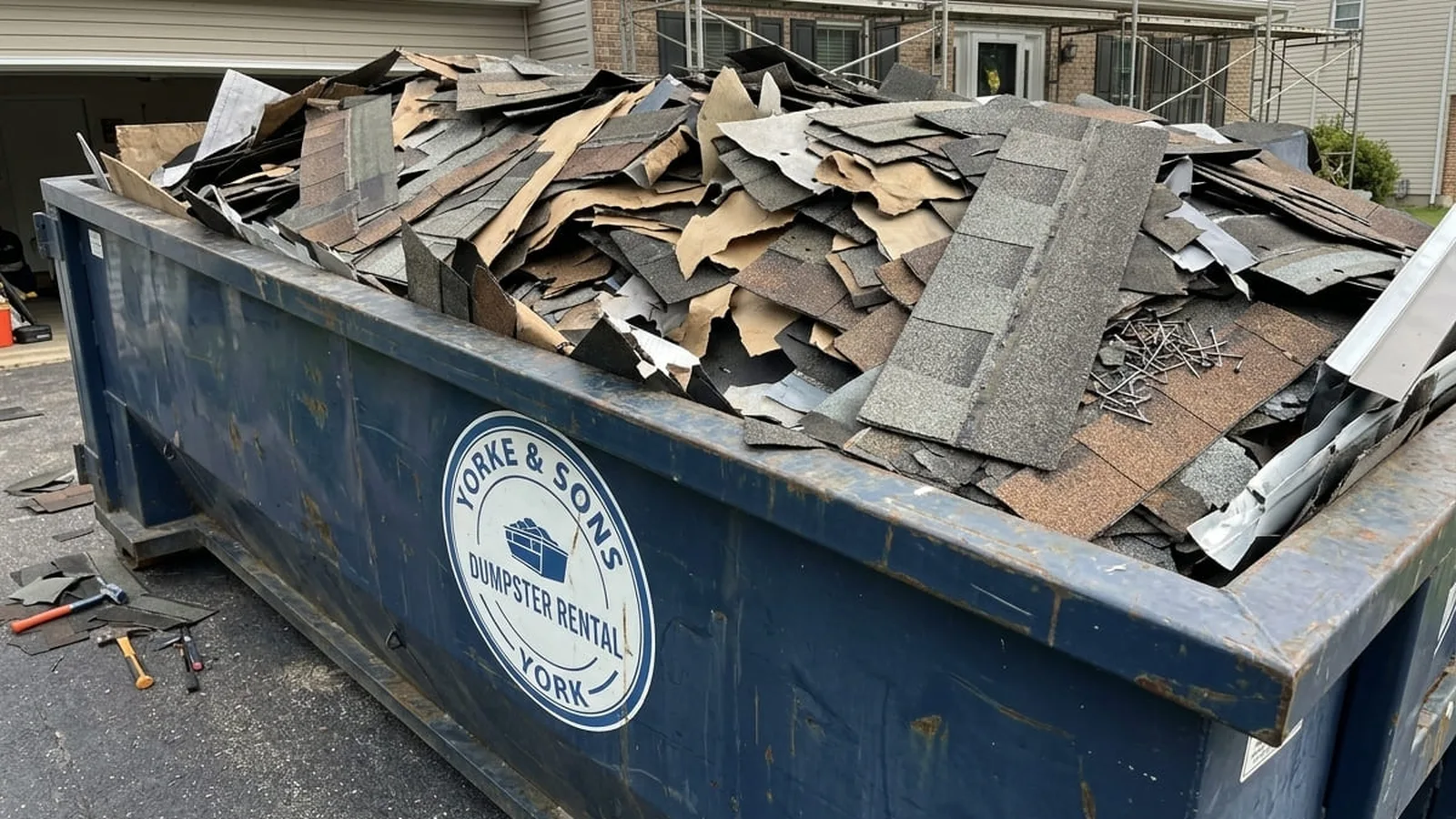
York County has no general right-of-way permit office — every one of its 72 municipalities handles its own streets. Here’s exactly who to contact based on where your dumpster sits.