Frozen Ground and Driveway Protection for Dumpster Placement in York, PA
A loaded dumpster is heavy, and York’s soft spring ground, older pavement, and tight rowhome lots all call for the same fix: boards under the container, every time.
York dumpster guide
York doesn’t get one hard freeze and stay there — it cycles between freezing nights and above-freezing days all winter, and that repeated cycle is what causes the damage.
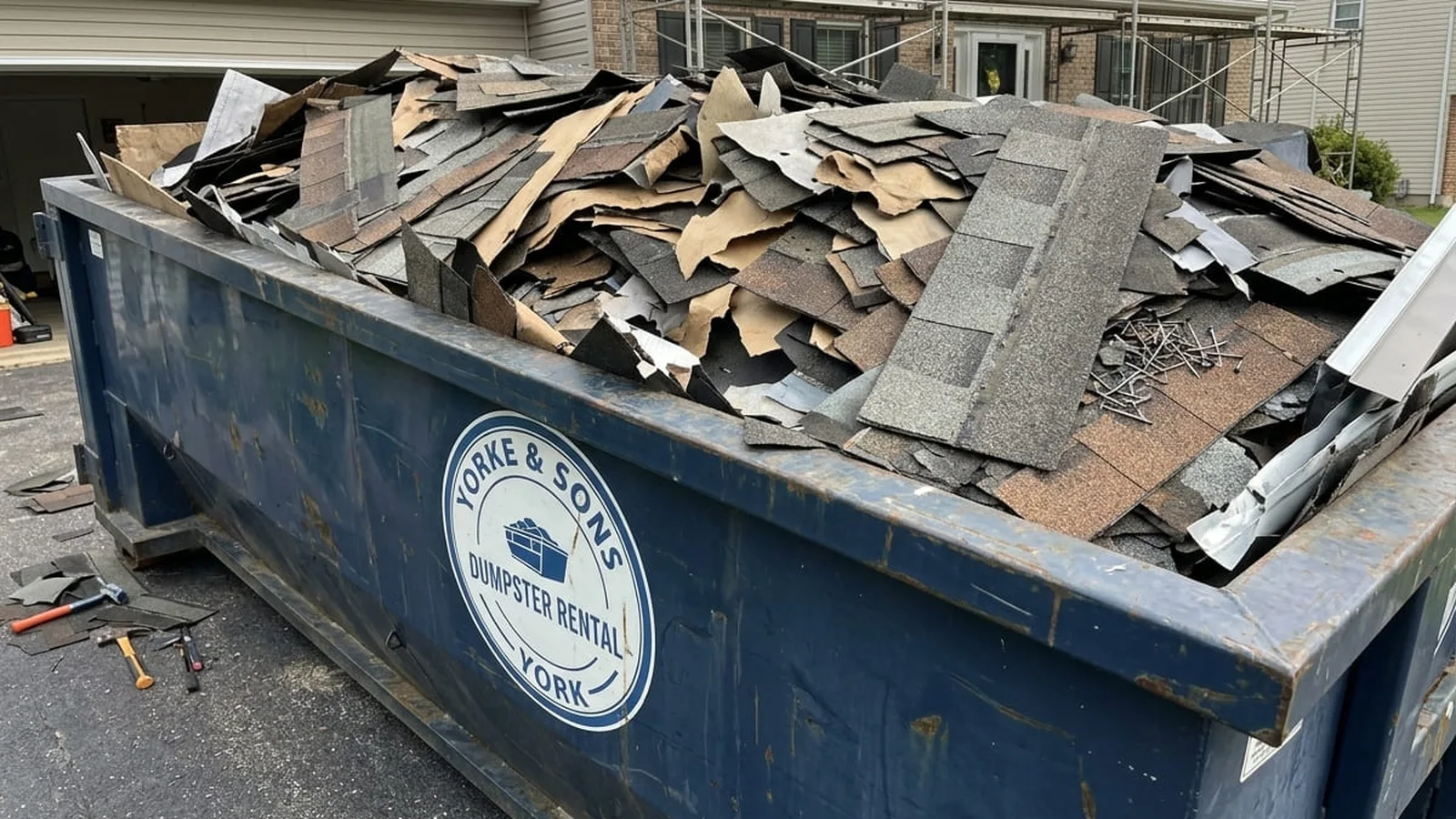
York, Pennsylvania sits right on the freeze/thaw line. A typical January sees average daytime highs around 38°F climbing back above freezing even as overnight lows drop to roughly 24°F. That’s the important part: the ground doesn’t freeze solid and stay that way from December through March. It cycles — freezing at night, thawing during the day, over and over — for most of the season. The Yorke & Sons Dumpster Rental team plans deliveries around this pattern because it directly affects driveways, foundations, and outdoor surfaces across the service area.
A single hard freeze that stays frozen does relatively little to pavement and foundations. It’s the repeated cycling — water seeping into small cracks, freezing and expanding overnight, then thawing and seeping deeper the next day — that drives frost heave and widens existing cracks in driveways, sidewalks, and foundations. Homeowners across York County typically notice the damage most clearly by late winter and into spring thaw, once a season of freeze-thaw cycles has done its slow work.
Winter and early-spring projects driven by freeze-thaw damage tend to fall into a few categories: cracked driveway or patio removal, storm-damaged fencing or outbuildings, basement or crawlspace cleanouts prompted by seasonal moisture issues, and general decluttering that happens naturally during indoor winter months. All of these are standard dumpster rental jobs — the seasonal timing just shapes when demand for them peaks.
Because York’s ground doesn’t stay frozen solid all winter, placement surfaces can be inconsistent — solid one morning, soft by afternoon, especially during an active thaw. A loaded dumpster is heavy, and soft ground under one corner of a container can lead to sinking or an uneven load. This is exactly why the team places boards under every container as standard practice during freeze-thaw season — see our dedicated frozen ground and driveway protection guide for the full explanation.
Homeowners who’ve lived in places with either a much harsher winter or almost no winter at all sometimes underestimate what freeze-thaw cycling does to a property, because it’s a distinctly mid-Atlantic pattern. A climate that freezes hard and stays frozen for months does less cyclical damage than one that swings back and forth across the freezing point repeatedly, which is exactly York’s pattern. It’s worth understanding this distinction because it explains why York County pavement and foundation damage often looks worse by spring than the winter’s coldest temperatures alone would suggest.
Once the ground fully thaws in spring, the winter’s freeze-thaw damage becomes visible and workable all at once — cracked concrete gets torn out, storm-related debris gets cleared, and homeowners tackle projects that weren’t practical during the coldest stretch. This is typically the busiest stretch for freeze-thaw-related cleanup across York County, and booking a few days ahead during peak spring demand helps guarantee the delivery date you want.
Not every winter dumpster rental is weather-related at all — York County’s colder months are also when a lot of interior projects get tackled: basement finishing, garage reorganizations, closet and attic decluttering that’s easier to face once outdoor yard work slows down. These projects don’t require any special seasonal handling, but they do add to overall winter demand, so booking a few days out rather than expecting next-day delivery keeps your schedule predictable.
Whether it’s a cracked driveway coming out, storm cleanup, or a basement cleanout that’s been on the list all winter, call (717) 400-8504 and the team will factor the season into both placement (surface protection) and scheduling. See our sizing guide to figure out the right container for the project once you’re ready to book.
FAQs
No — that’s the key point. York sits on the freeze/thaw line, with daytime highs often climbing back above freezing even in January while nights drop well below it. The ground cycles between freezing and thawing rather than staying frozen solid.
Water gets into small existing cracks, freezes and expands overnight, then thaws and seeps deeper the next day. Repeated over a whole winter, this cycle is what widens cracks and causes frost heave — more than a single hard freeze would.
Yes, year-round. The team places boards under every container as standard practice, which matters even more when the ground alternates between solid and soft during freeze-thaw season.
Spring thaw is typically the peak, once winter’s accumulated damage — cracked pavement, storm debris — becomes fully visible and workable. Booking a few days ahead during this stretch helps lock in your preferred delivery date.
No. York’s notable seasonal weather pattern is the freeze/thaw cycle, not tropical storms or hurricanes — this region doesn’t see that kind of storm activity.
Ready when you are
Call and you will speak to someone local who knows the streets, the permit rules and which box actually fits your driveway. Flat rate quoted up front.
Keep reading

A loaded dumpster is heavy, and York’s soft spring ground, older pavement, and tight rowhome lots all call for the same fix: boards under the container, every time.
Between curbside programs, the county solid waste authority, and Pennsylvania’s specific rules on hazardous items and electronics, here’s where everything actually goes.

Picking the right dumpster size comes down to two questions: how much space will the debris take up, and how much will it weigh? Here’s how to answer both before you call.